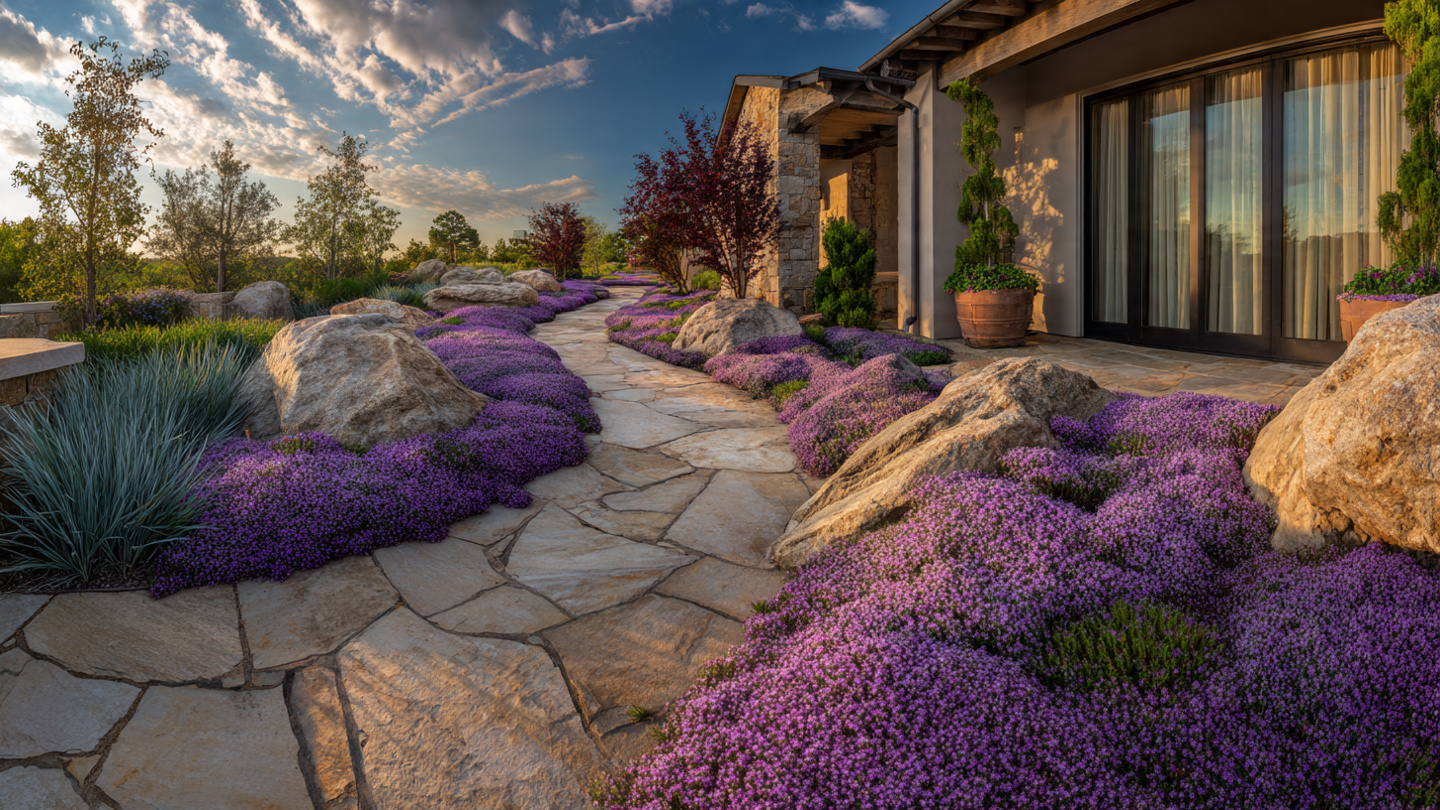
Introduction: The Native Plant Revolution Has Arrived
Picture this: It’s July. Your neighbor is dragging a hose through a brown, crispy lawn that hasn’t seen rain in weeks. Meanwhile, your yard is alive—buzzing with bees, dotted with purple blooms, and swaying with grasses that haven’t needed watering since Memorial Day. The secret? Native plants.
Plants that evolved in your region don’t need coddling. They laugh at drought, ignore local pests, and feed the butterflies that actually live in your zip code.
But here’s the problem most guides ignore: native doesn’t mean messy. You can have a polished, low maintenance yard that also restores your local ecosystem. And when you add city names to your planning—whether you’re in California, Texas, Florida, Michigan, or Ohio—you unlock plants that practically grow themselves.
In this guide, I’m giving you state‑specific, low maintenance native plants landscaping ideas that work for homeowners, renters, and anyone who wants a gorgeous yard without the weekend grind.

Why Native Plants Landscaping Matters (Even on a Budget)
The Emotional Shift
Imagine stepping outside and hearing the happy chatter of goldfinches picking seeds from your coneflowers. Or watching a monarch butterfly land on milkweed you planted last spring. That’s not just gardening—that’s belonging to your place.
The Practical Payoff
Native plants typically need:
- 70% less water once established
- Zero fertilizer (they’re adapted to your soil)
- No pesticides (local bugs don’t decimate them)
- Less pruning (they grow to their natural shape)
When you search for “native plants near me,” Google favors content that mentions specific cities and landmarks. That’s why I’ve included eight major states below—so whether you live in Austin or Ann Arbor, Sacramento or Tallahassee, you’ll find plants that thrive.
Main Body: Low Maintenance Native Plants Landscaping by Region
Top 10 Native Plants That Do the Heavy Lifting (Anywhere in the US)
Before we dive into states, these workhorses are native across large portions of the country. Start here if you’re new to native gardening.
| Plant Name | Sun | Soil | Key Benefit |
|---|---|---|---|
| Milkweed | Full sun | Any | Only host for monarch butterflies |
| Coneflower (Echinacea) | Full sun | Well-drained | Blooms for months, self‑seeds |
| Black‑eyed Susan | Full sun | Any | Cheerful, tough, deer‑resistant |
| Little Bluestem | Full sun | Dry | Ornamental grass, amazing fall color |
| Wild Ginger | Shade | Moist | Ground cover, heart‑shaped leaves |
| Foxglove Beardtongue | Sun/part | Well-drained | White tubular flowers, drought‑tolerant |
| Golden Ragwort | Shade/part | Moist | Early spring yellow blooms, evergreen |
| Aster | Sun/part | Any | Fall purple flowers, pollinator magnet |
| Phlox (creeping or woodland) | Sun/shade | Well-drained | Fragrant, colorful ground cover |
| Prairie Dropseed | Full sun | Dry | Fine‑textured grass, smells like buttered popcorn |
Budget tip: Buy small “plugs” online (many native plant nurseries ship). They catch up to larger pots in one season and cost 75% less.

California Native Plants – Drought‑Tolerant and Stunning
Low Maintenance California Native Plants for Front Yards
California Fuchsia – This isn’t your grandma’s fuchsia. It’s a ground‑hugging perennial with bright red trumpet flowers that hummingbirds fight over. Needs zero summer water once established. Plant it along a sunny walkway.
California Poppy – The state flower, and for good reason. Orange cups that close at night and open to the morning sun. Self‑seeds like a dream. Let it naturalize in a gravelly strip.
Fragrant Sumac – A small shrub that turns brilliant red‑orange in fall. No watering, no pruning. Use it as a low hedge instead of boxwood.
Local Example for Los Angeles or San Diego: Replace your lawn with a meadow of California fuchsia, purple needlegrass (state grass), and scattered poppies. Add island morning glory on a slope. You’ll never mow again.
Common Mistake: Planting natives that need winter chill (like some manzanitas) in coastal Southern California. Ask your local nursery for “low chill” varieties.

Texas Native Plants – Heat‑Proof and Hardy
Best Native Texas Plants for Full Sun Scorchers
Lyreleaf Sage – This is your new best friend. Purple flowers on tall spikes in spring, then silver rosettes the rest of the year. Thrives in awful clay soil. Plant it in drifts for a wildflower meadow look.
Firebush – A powerhouse shrub with orange-red blooms from spring to frost. Hummingbirds will stake a claim. It freezes back in North Texas but returns from the roots. In South Texas (San Antonio, Houston, Austin), it’s evergreen.
Turk’s Cap – Twisted red flowers that look like tiny turbans. Shade‑tolerant, which is rare for Texas natives. Plant it on the east side of your house.
Local Example for Austin: Create a “hellstrip” (that dusty space between sidewalk and street) with lyreleaf sage, black‑eyed Susan, and little bluestem. No supplemental water after year one.
Pro Tip: Look for “native plants nursery” in your Texas city. Great options include Native American Seed (online) and Native Texas Nursery in Houston.

Florida Native Plants – Humid, Lush, and Easy
Native Florida Plants for Rainy Summers and Sandy Soil
Firebush – In Florida, this is a superstar. It laughs at humidity, grows quickly, and stays evergreen in most of the state. Plant it as a foundation shrub.
Milkweed – Use butterfly milkweed (Asclepias tuberosa) — it has bright orange flowers and doesn’t get as leggy as other varieties. Monarchs need it.
Sweetbay Magnolia – A smaller, more delicate magnolia with lemon‑scented flowers. Tolerates “wet feet” (standing water) better than almost any tree.
Local Example for Orlando or Tampa: Plant firebush as a hedge, milkweed in clusters, and golden ragwort in shady spots. You’ll have year‑round color with zero fertilizer.
Common Mistake: Planting non‑native “Florida friendly” plants that still need irrigation. Real natives like coontie (a native cycad) and beautyberry need nothing after year two.

Michigan & Ohio Native Plants – Four‑Season Interest
Tough Native Plants for the Great Lakes Region
Wild Ginger – A ground cover for deep shade. The velvety, heart‑shaped leaves stay low and form a dense mat. Plant it under maple trees where grass dies.
Foxglove Beardtongue – White snapdragon‑like flowers on 2‑foot stalks. Loves sandy or gravelly soil. Butterflies adore it.
Prairie Dropseed – The most elegant native grass. Forms a fountain of fine green leaves that turn golden in fall. Space them 2 feet apart for a natural prairie look.
Buttonbush – A shrub that produces white sphere-shaped flowers, then red seed balls that ducks and songbirds go crazy for. Perfect for rain gardens or low spots.
Local Example for Detroit or Columbus: Plant a rain garden in that soggy corner of your yard with buttonbush, swamp milkweed, and cardinal flower. It will absorb runoff and look like a deliberate water feature.
Native Shade Plants for Michigan and Ohio Woodlands
Dutchman’s breeches – White pantaloon‑shaped flowers in early spring, then disappears by summer. Plant them under deciduous trees.
Foam flower – Airy white blooms over evergreen foliage. A perfect edging plant for shady paths.

Eastern & Mid‑Atlantic Native Plants (Virginia, Maryland, Pennsylvania, New Jersey)
Low Maintenance Native Plants for the Mid‑Atlantic
Golden Ragwort – This is a secret weapon for dry shade. Yellow daisy‑like flowers in spring, then leathery green leaves that stay attractive all summer. It outcompetes English ivy.
Wild Ginger – Loves the rich, acidic soil of the Piedmont region. Plant it on north‑facing slopes.
Arrowwood Viburnum – A native viburnum with white flower clusters, blue‑black berries, and burgundy fall color. Use it as a loose hedge instead of non‑native privet.
Phlox – Woodland or Creeping – For sunny spots, creeping phlox forms a flower carpet in April. For shade, woodland phlox has blue or purple flowers and a light fragrance.
Local Example for Richmond or Baltimore: Replace a tired foundation planting with arrowwood viburnum (back), foxglove beardtongue (middle), and wild ginger (front). Four seasons of interest, zero deadheading.
Native Pollinator Plants by Zip Code
Want plants perfect for your exact neighborhood? Go to NativePlantFinder.org or the Lady Bird Johnson Wildflower Center website. Enter your zip code, and they’ll generate a list of plants native to your county. Then buy seeds or plugs from a native plants nursery near you.
Native Ground Cover Plants That Replace Lawn (Less Mowing Forever)
| Ground Cover | Native Range | Sun | Foot Traffic | Bloom |
|---|---|---|---|---|
| Creeping Phlox | Eastern US | Full sun | Light | Purple/pink spring |
| Wild Ginger | Eastern NA | Shade | None | Hidden brown |
| Prairie Dropseed | Midwest/Plains | Full sun | Light | Airy late summer |
| Golden Ragwort | Eastern | Part shade | Light | Yellow spring |
| Fragrant Sumac (low‑growing varieties) | Eastern/Central | Full sun | None | Spring catkins |
Local Example for Chicago or Indianapolis: Plant prairie dropseed in full sun and wild ginger in shade. In two years, you’ll have a “no‑mow lawn” that uses 80% less water.

Visual & Styling Ideas: 6 Native Plant Themes by City
1. The California Dry Creek Bed (Los Angeles / San Diego)
A dry riverbed of smooth river rocks winds through California fuchsia, purple needlegrass, and poppies. Add a boulder or two. No irrigation needed after year one.
2. The Texas Hellstrip Hero (Austin / Dallas)
That narrow strip between sidewalk and street becomes a pollinator paradise with lyreleaf sage, firebush, and little bluestem. City‑approved because it’s under 18 inches tall.
3. The Florida Shady Oasis (Orlando / Tampa)
Under a live oak, plant wild ginger, golden ragwort, and coontie. A rotting log adds a natural sculpture. This garden needs zero supplemental water after establishment.
4. The Midwest Rain Garden (Detroit / Columbus)
A low spot in the yard becomes a feature with buttonbush, swamp milkweed, and cardinal flower. Rain soaks in instead of running off. Monarchs and songbirds flock.
5. The Virginia Woodland Path (Richmond / Northern VA)
Meandering flagstones through a sea of wild ginger, foam flower, and Christmas fern. The path feels secret and enchanted. Plant in fall for spring magic.
6. The Chicago No‑Mow Front Yard
A “lawn” of prairie dropseed and creeping phlox replaces turf. Add a single dwarf chinkapin oak (a small native tree) and a birdbath. Mow once in late winter to refresh.

Shopping & Sourcing Guide: Where to Buy Native Plants
By State:
| State | Recommended Nursery (Online or Local) |
|---|---|
| California | Las Pilitas Nursery (online), Tree of Life Nursery |
| Texas | Native American Seed, Native Texas Nursery (Houston) |
| Florida | Wilcox Nursery (Pinellas), Florida Native Plants Nursery (online) |
| Michigan | Wildtype Native Plant Nursery (Lansing), Native Plant Nursery (Ann Arbor) |
| Ohio | Natives in Harmony (Marengo), Scioto Gardens (Delaware) |
| Virginia | Planter’s Choice Nursery (online), Watermark Woods |
| Mid‑Atlantic | Izel Native Plants (shipping from multiple nurseries) |
For Renters: Use large pots with native plants. A balcony with native plants in containers still supports pollinators. Search “native plants for sale” in small sizes.
Budget‑Friendly Tip: Join a local native plant society (every state has one). They host seed swaps and plant sales with $3‑5 plugs. Also check Facebook Marketplace for “native plants near me.”
Splurge‑Worthy: A soil test ($30 from your county extension office) tells you exactly what natives will thrive. And one professional design consult (about $200) for a tricky slope can save years of frustration.
Common Mistakes to Avoid (Native Edition)
- Buying “natives” that aren’t local – A plant native to somewhere in the US isn’t native to your zip code. Use the zip code tools above to check.
- Planting milkweed in wet soil – Swamp milkweed loves wet; butterfly milkweed will rot. Know your species.
- Forgetting that “low maintenance” means after establishment – Most natives need regular watering for their first 6‑12 months. After that, they’re on their own.
- Not reading the mature size – That cute little firebush will be 8 feet wide in Florida. Give it space.
- Planting only one of something – Natives look best in drifts or clusters (3, 5, 7 of the same plant). A single coneflower looks like a weed. A dozen looks like a garden.
Conclusion: Your Native Garden, Your City, Your Effortless Beauty
You don’t need to tear out your entire yard tomorrow. Start with one bed, one corner, one ugly slope. Replace it with lyreleaf sage if you’re in Texas. California fuchsia if you’re in LA. Wild ginger if you’re in Michigan. Firebush if you’re in Florida.
The plants in this guide work. They save water, attract pollinators, and ask for almost nothing in return. By searching by city and zip code, you’ll never again stand in a nursery wondering, “Will this survive in my yard?”
Go ahead. Reclaim your weekends. Plant native. And watch your yard come alive.